

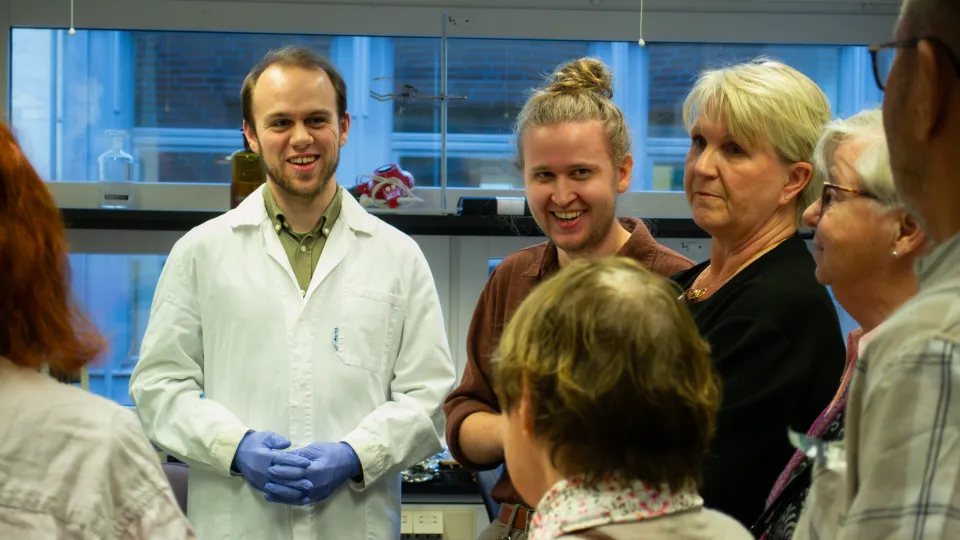
Today’s basic research on brain disorders such as Parkinson’s may be the starting point for tomorrow’s treatments. This may explain the participants’ deep interest in MultiPark’s experimental research projects during the fully booked study visit. As the December sun reached its peak, the patients and their relatives were welcomed by young researchers who demonstrated what their practical work looks like on a typical day in the lab.
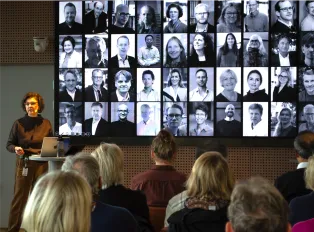
The visit began on the top floor of the newly built Forum Medicum, where MultiPark’s leadership presented how the strategic research area works towards the goals of better understanding, diagnosing, and treating Parkinson’s disease in the future. Several researchers also introduced their ongoing Parkinson’s projects, and questions began to bubble up almost immediately. This marked the beginning of an afternoon filled with curiosity, conversations, and new insights.
The group then moved into the heart of the research environment: the laboratories.

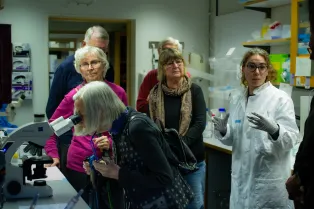
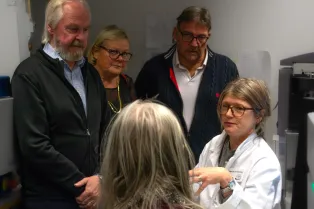
Here, the visitors were shown how researchers stain the brain structures affected by Parkinson’s disease, step by step. At one of the stations, high-tech equipment was demonstrated — machines capable of capturing images of numerous stained areas within seconds, enabling researchers to analyze more, faster, and with greater precision than before.

The visit ended with a fika session, where patients and their relatives had the opportunity to ask researchers questions and share which aspects of the disease they would like researchers to explore further.
Photos: Emma Nyberg.